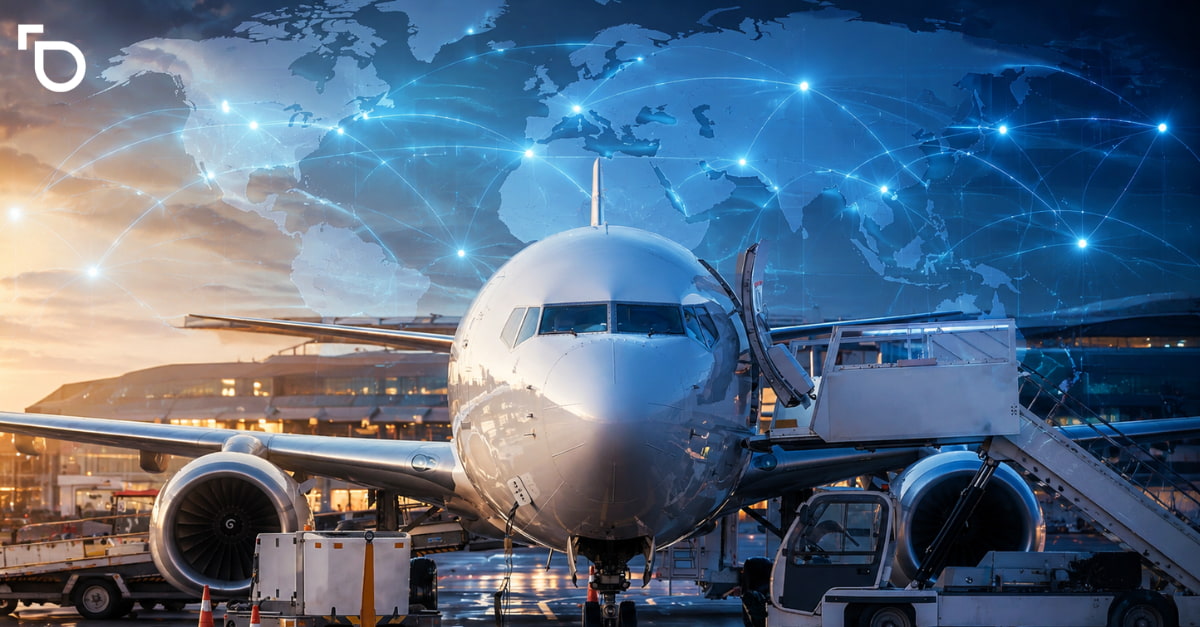
Air transport is undergoing a period of growth and transformation characterised by rising demand, technological advances and the need to manage large volumes of data. Against an international backdrop shaped by geopolitical uncertainty, shifts in trade flows and changes in supply chains, air freight is establishing itself as a strategic option for goods that require speed, security and responsiveness.
Increased demand and freight volumes
Global air freight has gained traction during the first half of 2026. In June, global demand grew by 8.5% year-on-year, whilst available capacity increased by 4.4%. In international traffic, demand growth reached 9.6%, reflecting the strength of certain trade corridors, notably the intra-Asian route to North America.
This increase is due, amongst other factors, to the growth of e-commerce and the rise in the transport of high-value goods, particularly technological products. Routes between Asia, Europe and North America account for a significant proportion of this activity and the prospects for the coming months remain favourable. However, the sector remains exposed to factors such as geopolitical tensions, changes in tariffs and cost trends, all of which can rapidly alter routes and the flow of goods.
Digitalisation is transforming air transport
Alongside the growth in volume, technology is changing the way goods are managed. Artificial intelligence, big data, APIs and document digitalisation are making it possible to automate processes, improve planning and access real-time information.
Artificial intelligence is beginning to be applied in areas such as demand forecasting, capacity management, bookings and document processing. At the same time, initiatives such as the e-AWB – the digital version of the air waybill – are helping to reduce paper usage and streamline the exchange of information between the various players in the logistics chain.
The aim is to move towards a model in which data travels ahead of the goods, making it possible to anticipate incidents, optimise resources and make decisions more quickly.
Experience to deliver efficient solutions
Against this backdrop, companies such as Intermodal Global Logistics (IGL), specialists in logistics and international trade, are strengthening their role within the supply chain. Their function goes beyond the coordination of transport; it is essential to manage, integrate and share information from airlines, airports, customs authorities, logistics operators and customers. The effective management of this data is becoming increasingly important for ensuring traceability, complying with new regulatory requirements and improving operational efficiency.
Faced with these challenges, Intermodal Global Logistics (IGL) is committed to combining logistics expertise, technology and adaptability to deliver efficient and secure solutions. In a constantly evolving sector, digitalisation has become an essential tool for anticipating customers’ needs and ensuring increasingly agile freight management.